My ChatGPT Ribs Recipe
I asked ChatGPT to tell me how to make ribs a while back. And it came up with those whole-ass thing. I’m reposting it here because I got a kick out of it. I mean, it doesn’t get everything right, but I’m still surprised that it got me as far as it did!
OFFSET SMOKER SPARE RIBS — COMPLETE BATTLE PLAN
EQUIPMENT
Smokin' Joe's Offset Smoker
Fuel: Fogo premium hardwood lump charcoal
Wood: Cherry chunks
STEP 1 — PREP THE MEAT
Remove the membrane from the bone side of each rack. Slide a butter knife under the membrane at one end, grip with a paper towel, and pull it off in one motion.
Pat both racks dry with paper towels.
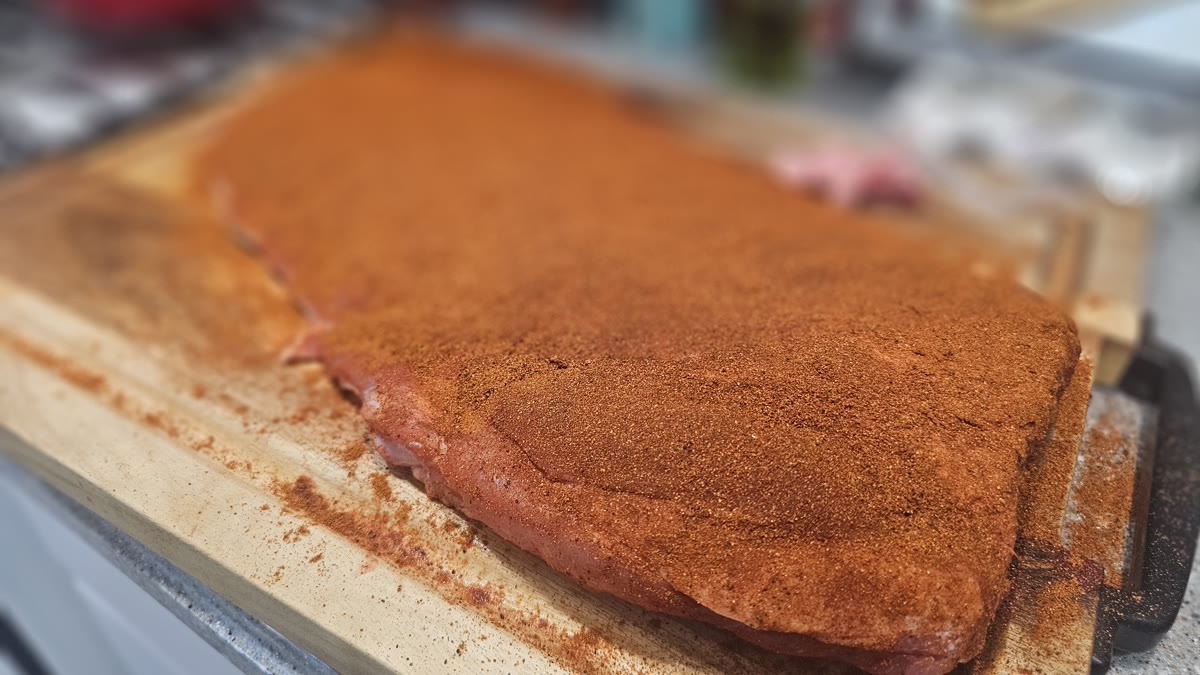
Apply dry rub to all surfaces — meat side, bone side, and all edges. Work it in with your hands.
Rub Options
Store-bought: Bad Byron's Butt Rub, Meat Church Holy Cow, or Blues Hog Dry Rub
Homemade (per 2 racks):
¼ cup brown sugar
2 tbsp paprika
1 tbsp chili powder
1 tbsp garlic powder
1 tbsp onion powder
1 tbsp black pepper
2 tsp salt
1 tsp cumin
1/2 tsp cayenne
Rest After Applying Rub
30–60 minutes: Leave uncovered at room temperature
Overnight: Wrap tightly in plastic wrap and refrigerate
My output:
STEP 2 — FIRE THE SMOKER
Light Fogo lump charcoal in the firebox.
Bring smoker to your target temperature before placing ribs on the grate.
Add cherry wood chunks once target temp is reached.
Keep the exhaust damper approximately ¼ open throughout the cook.
STEP 3 — DEPLOYMENT
Place ribs bone side down, meat side up on the grate.
Do not flip at any point during the cook.
Maintain target temperature. Adjust intake damper and add charcoal as needed.
Add one cherry chunk per hour for the first 4 hours only.
STEP 4 — TEMPERATURE AND TIME OPTIONS
Target Temp | Cook Time | Notes |
|---|---|---|
225°F | 8 hours | Maximum smoke, deepest bark |
250°F | 6 hours | Low and slow, excellent flavor |
275°F | 5 hours | Sweet spot — recommended |
300°F | 4 hours | Fast mission, check at 3.5 hrs |
Baby back ribs at 300°F: Approximately 3–3.5 hours. Check doneness at 2.5 hours.
STEP 5 — TEMPERATURE MANAGEMENT
Minor drop (290–295°F): Open intake damper slightly
Major drop (below 285°F): Add a small handful of Fogo lump charcoal and increase airflow
Allow 15 minutes between adjustments before reassessing
Normal fluctuation of ±10–15°F is acceptable
LUMP CHARCOAL FUEL CADENCE:
Lump charcoal pieces vary in size — do not count pieces as a unit of measurement like briquettes. Instead:
Check thermometer first — adjust intake damper before reaching for fuel
If damper adjustment is insufficient: Add a small handful of lump charcoal
Expect to add fuel roughly every 45–60 minutes depending on conditions
Outside temperature and wind will affect burn rate — always let the thermometer guide you, not the clock
FOR REFERENCE — BRIQUETTE CADENCE (if ever used):
6-10 briquettes per hour is a reasonable general guideline, since briquettes are uniform in size and burn predictably. This does not apply to lump charcoal.
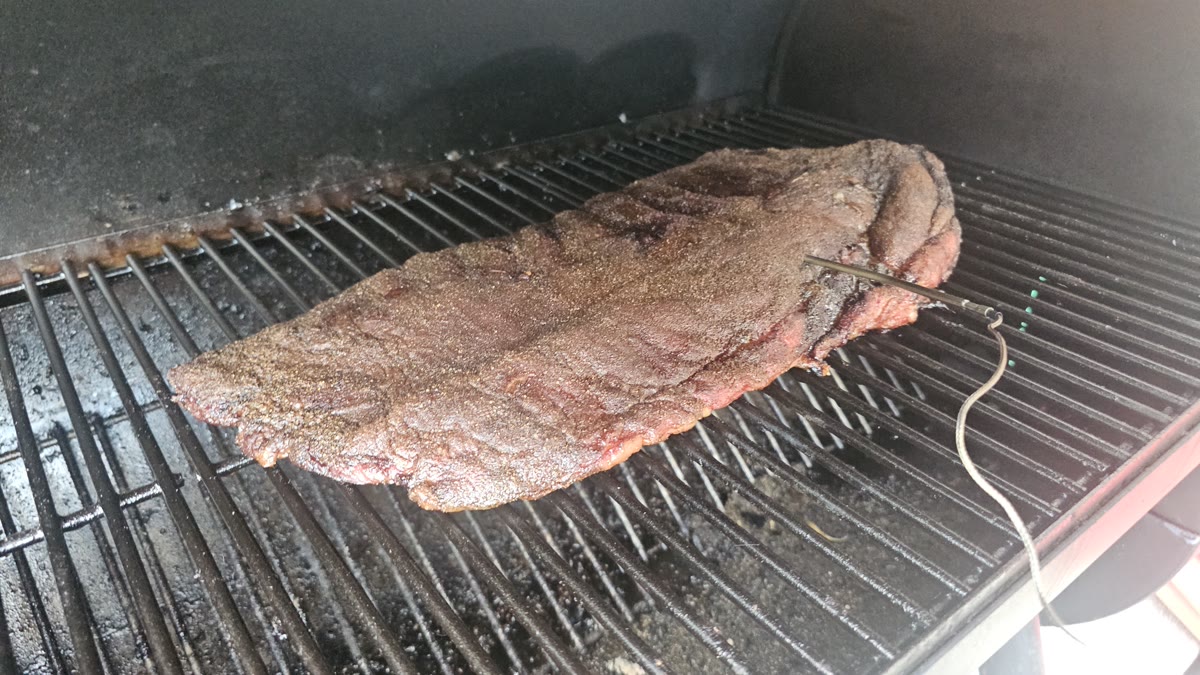
My output:
STEP 6 — SPRITZING (APPLE CIDER VINEGAR)
0–33% of cook time: Do NOT spritz — let bark develop undisturbed
33% onward: Spritz every 30–45 minutes until final 15 minutes
Final 15 minutes: Stop spritzing — sauce window if using
APPLICATION METHOD:
Light, even mist on meat side only
Do not saturate — moisture only, not a bath
Work quickly to minimize heat loss
Recommended quantity: Fill bottle with 6–8 oz — better to have excess than run dry
STEP 7 — SAUCE (OPTIONAL)
Apply sauce in the final 15 minutes only — earlier will cause burning
Brush on the meat side only
Thin, even coat — sauce should enhance, not mask
Alternatively, serve sauce on the side
STEP 8 — DONENESS TESTS
Ribs are done when ALL of the following are true:
Bend test: Pick up the rack with tongs at one end — it bends 90° without breaking
Pull-back: Meat has pulled back approximately 1/4 inch from the bone ends
Probe test: A toothpick or thermometer probe slides between bones with minimal resistance
Internal temp: 195–203°F
STEP 9 — REST
Rest ribs uncovered for 15 minutes before slicing. Do not wrap — the bark will soften.
SLICING
Cut between each bone. Serve bone side down on the plate.
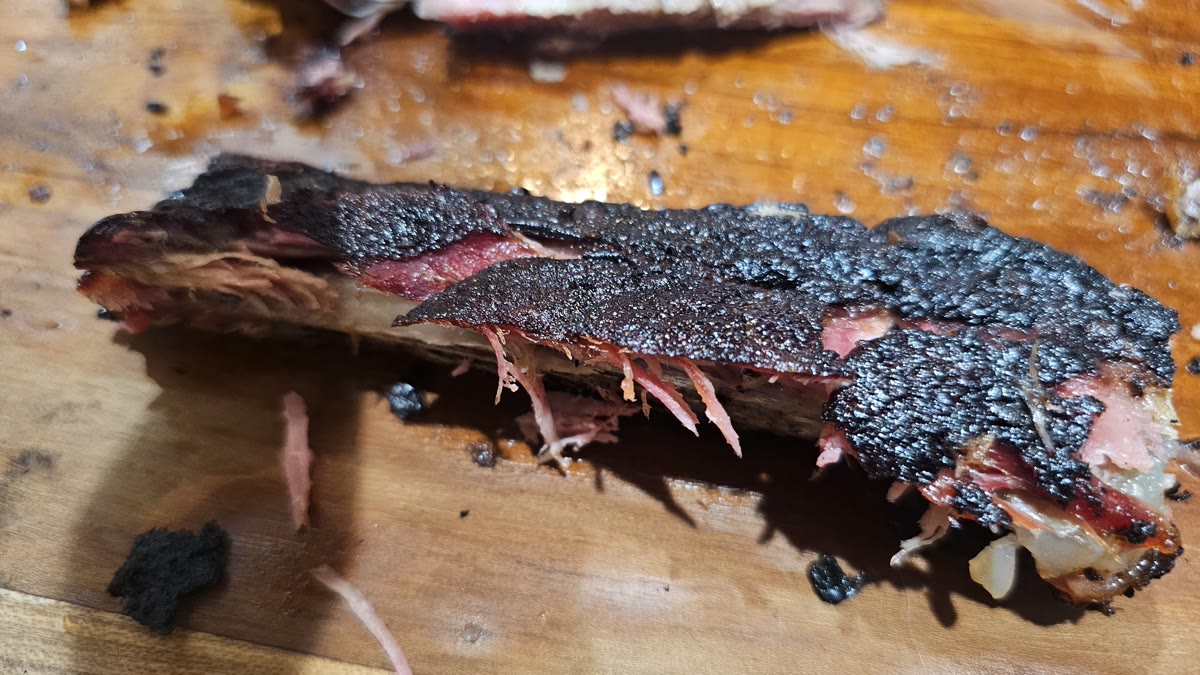
My ouput:
Comments
No comments yet. Be the first to say something.